In her book “Life in the Garden,” Penelope Lively writes, “The great defiance of time is our capacity to remember, the power of memory. Time streams away behind us, and beyond, but individual memory shapes, for each of us, a known place.”
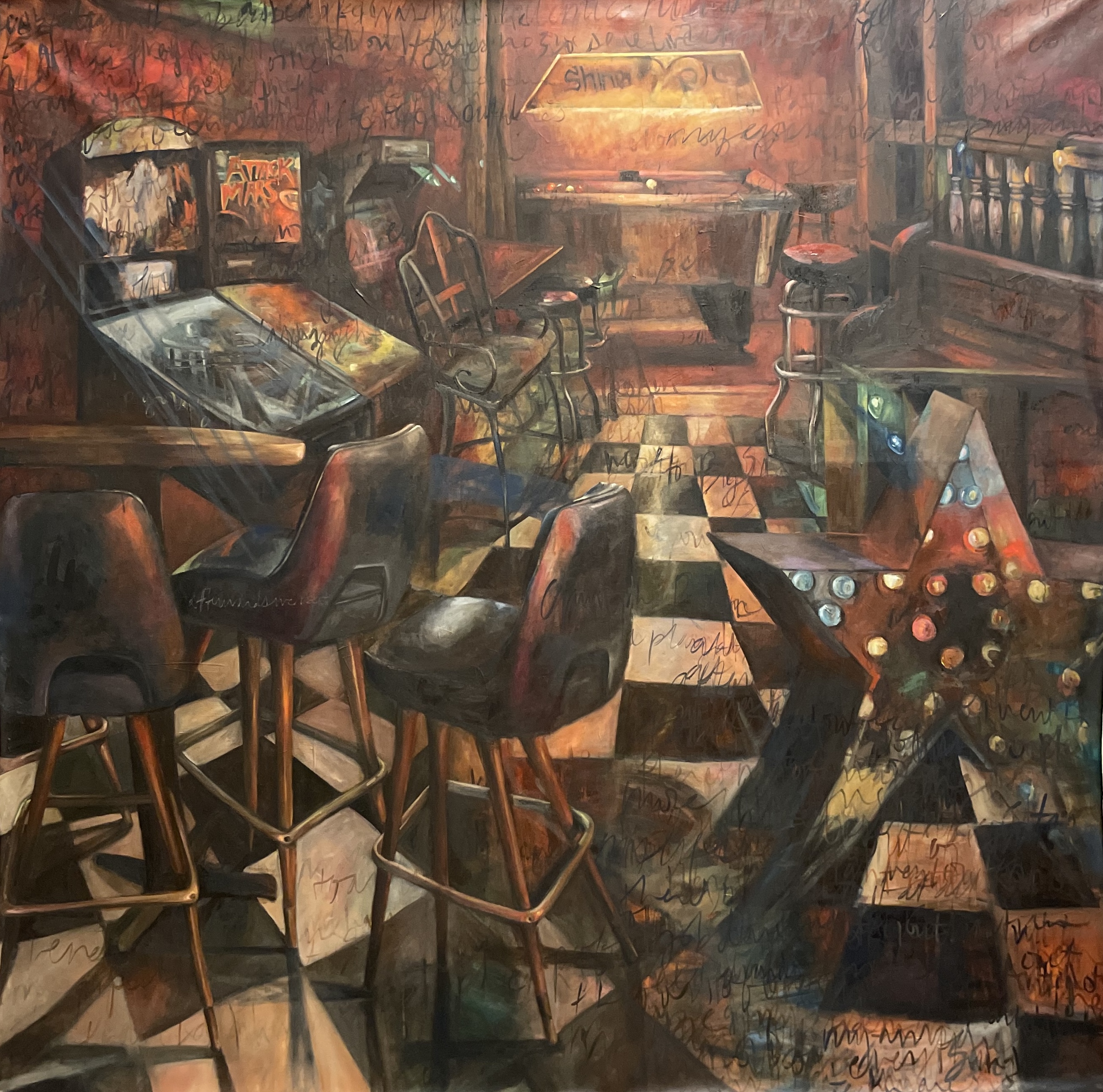
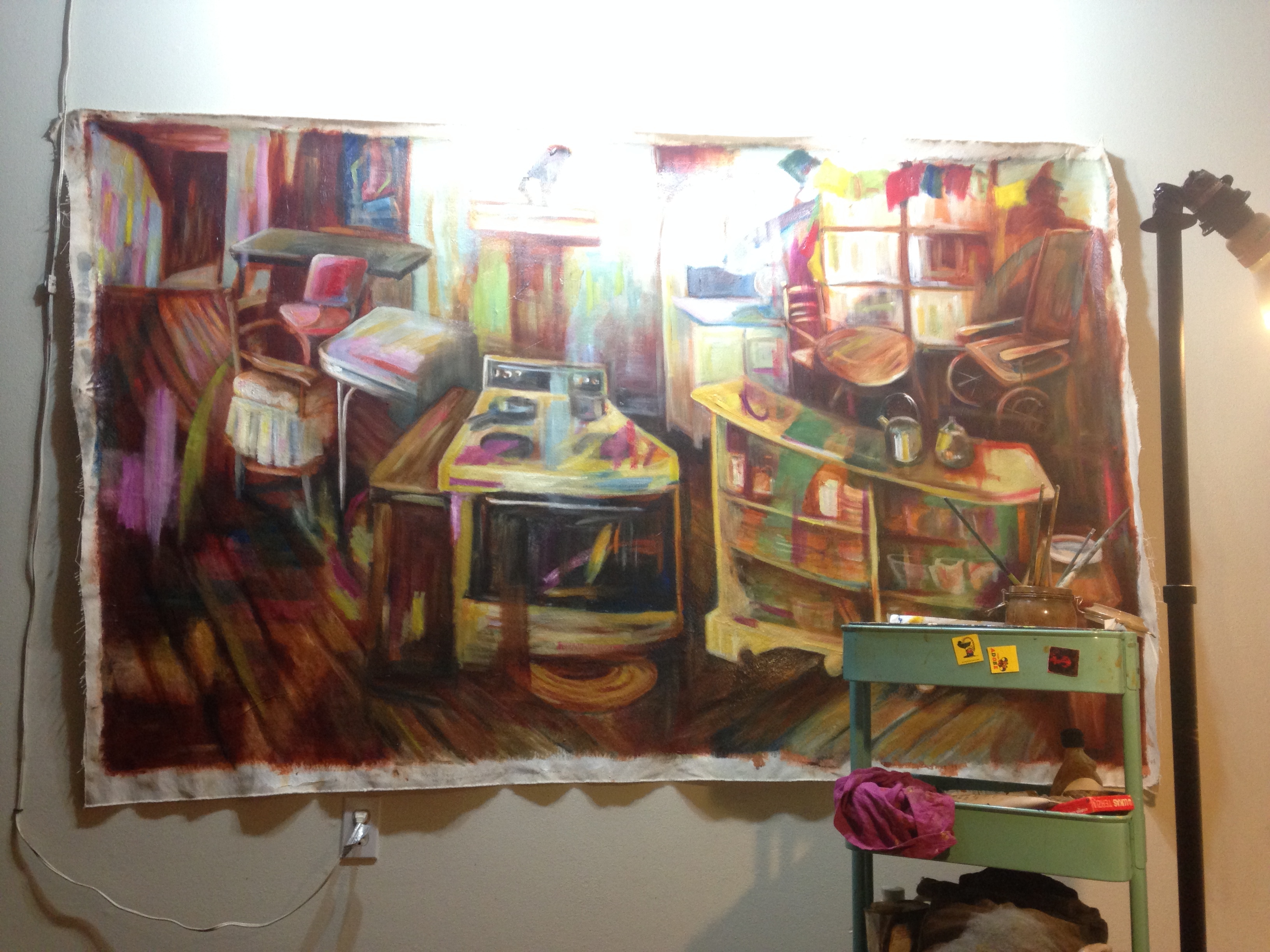
That sentiment is a perfect descriptor for my “dislocation” series, which really is about nostalgia. I am currently working on a painting entitled, “Afterwards we went to Big Star Bar/In the End is the Beginning.”
I have been thinking about how tempting it can be to slide into the past. But is it “healthy?” And does that even matter?
Lively writes, “We own a particular piece of time; I was there, then, I did this, saw that, felt thus.”
Lively says that gardens “reorder time and to garden is to impose order.” When we plant, we are looking forward, we are making plans, we are setting expectations. Gardens are also a marking of time, a way of honoring the passing of the seasons. Gardens rise, then fade away.
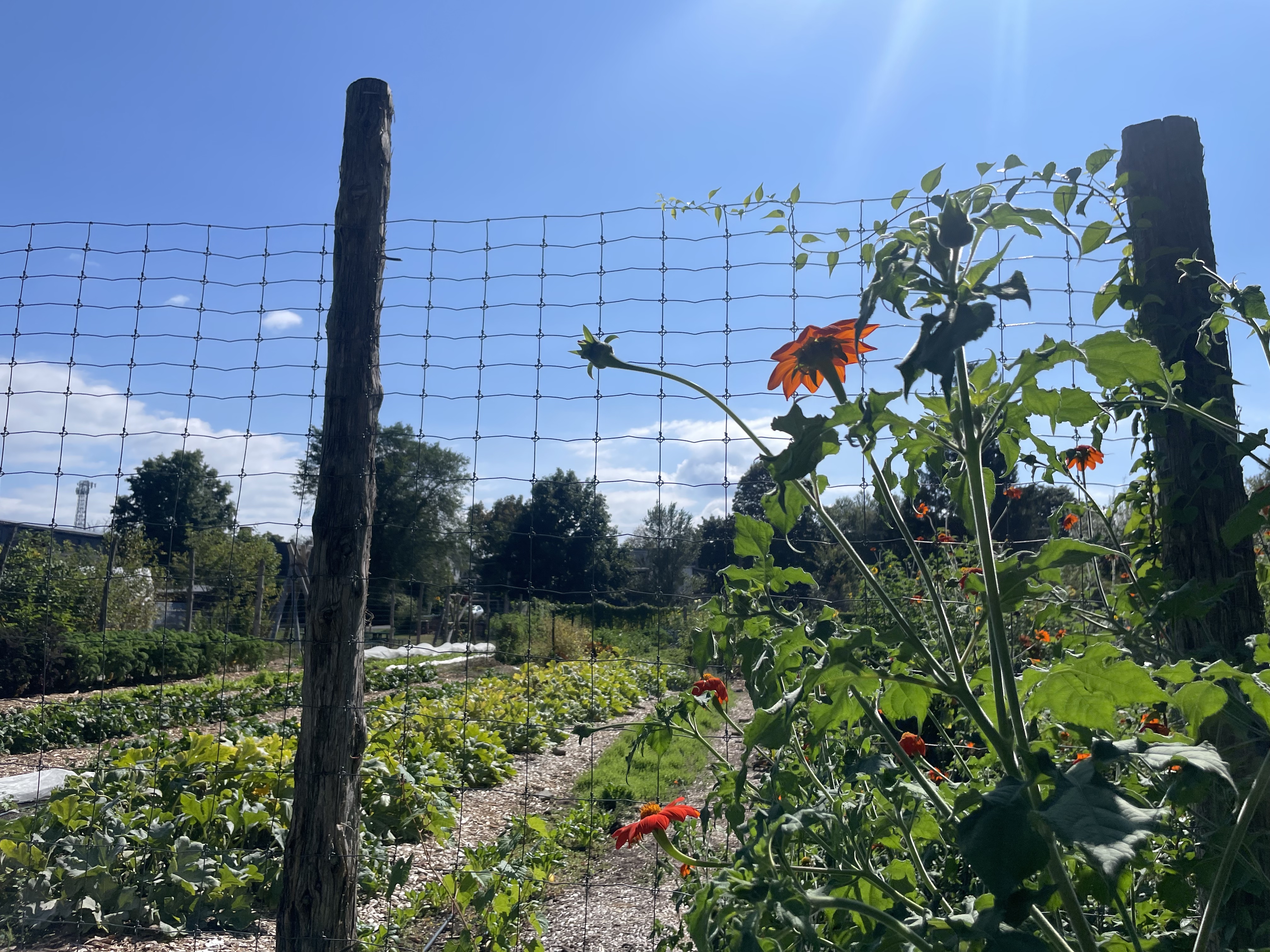
Lately, I’ve been taking a back way to the gym, crossing the railroad tracks to walk through the YMCA garden. Rows of kale stretch up to the sun, tomatoes take their last gasps of glory. Sunflowers start to droop, like slender necks bending under heavy heads. Bright splashes of amaranth make an appearance in the corners.
This week, I unexpectedly ran into author Raluca Albu at a reading in my small town’s bookstore. We met almost a decade ago at the Art Farm, a place where we gardened and planted trees together.
Seeing Raluca felt like a time loop to me. We sat together in a row of foldable chairs, facing a microphone set up for the readers.
At one point, a mouse ventured out from behind a shelf of books, and the audience members in the front row, seated all three together on a couch, jumped back, spilling a drink. It made me remember when Raluca sprinkled cayenne pepper around our Art Farm house, hoping it would dissuade the mice from coming into our rooms.
I was there to see Samantha Hunt. Her books, “Mr. Splitfoot” and “The Seas,” helped me finally get back into reading.
She opened the pages of a newly launched magazine, “Elastic,” to read an excerpt from her short story. The narrator is an art professor who regularly visits an older friend. They like to sit outside and soak up the sun. The artist says she’s doing something radical—moving slow.
We live in a world that moves too fast, with phones constantly dinging, surrounded by an ever-present temptation to look over the shoulder of who you are with to see if there is somewhere else you should be, something better on the horizon.
But we do have the power to defy it, to remember, to pause, to be present, to dig, to plant seeds and to wait.
 Among the Artists